Source new energy hydrogen storage tube for gas, medical, and chemical uses
Find 30 verified listings for new energy hydrogen storage tube designed for gas storage, medical equipment, and chemical processing. Compare specifications including pressure levels, dimensions, and certifications from suppliers in China.
Key considerations
Products List


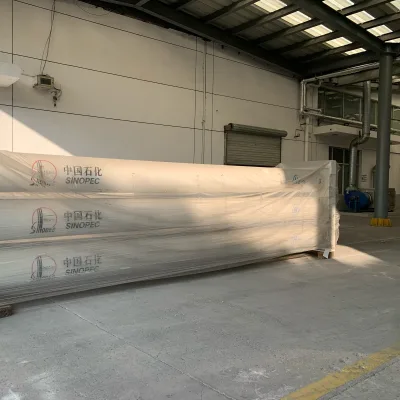


Hydrogen Storage Tube Skid and Vessel Tank for Green Hydrogen Production Plant
$100000.00 - $200000.00
Moq: 1

High Pressure H2 Container Tube Skid Hydrogen Storage Vessels for Refueling Station
$100000.00 - $200000.00
Moq: 1

Hydrogen Storage Tube Skid Tank Cylinder Used for Green Hydrogen Production Plant
$100000.00 - $200000.00
Moq: 1

High Pressure Hydrogen Storage Tube Skid Tank for Green Hydrogen Electrolyzer Plant
$100000.00 - $200000.00
Moq: 1

Customized High Pressure Hydrogen Vessels H2 Storage Tank and Tube Skid
$100000.00 - $200000.00
Moq: 1
Comprehensive Sourcing Guide
Strategic Sourcing Guide for New Energy Hydrogen Storage Tubes
Understanding Technical Specifications and Product Variants
When sourcing new energy hydrogen storage tubes, buyers must first navigate a complex landscape of technical specifications that define the product's capability and safety. The market offers a diverse range of configurations, from individual high-pressure cylinders to large-scale tube bundle containers. A critical observation in the current supply base is the variation in working pressure levels, which are essential for determining the suitability of the equipment for specific storage and transportation needs. The data indicates that products are available with service pressures ranging from 150 to 230, and specific models are engineered for high-pressure environments where the pressure level falls between 10.0 MPa and 100.0 MPa.
The physical dimensions and material composition are equally vital. Most units are constructed from steel, a material chosen for its durability and ability to withstand the rigorous demands of hydrogen storage. The outside diameter for certain standard models is observed at 229 mm, while the height without the valve is recorded at 1210 mm. Weight is a significant factor for logistics; for instance, a standard unit without the valve or cap weighs approximately 47 kg. Buyers should also note the existence of different model series, such as the ISO9809-1 series and specific commercial models like Tra-012, Tra-014, and Tra-015. These models often correspond to different bundling configurations, with some designed as 12-tube bundles and others as 25 MPa tube bundle containers.
Capacity is another primary differentiator. The supply chain includes units with standard capacities such as 40L, as well as a broader range spanning from 42L to 450L. This variation allows for flexibility in deployment, whether the requirement is for compact mobile applications or large-scale stationary storage. The ambient temperature tolerance is a crucial specification for operational safety, with some units rated to function effectively in environments ranging from -40°C to +85°C. Understanding these exact parameters is the first step in ensuring that the procured equipment aligns with the engineering constraints of the intended application.
Compliance and Certification Verification
In the hydrogen energy sector, compliance is not merely a regulatory formality but a fundamental safety requirement. Buyers must rigorously verify that suppliers possess valid certifications that align with international and regional standards. The observed market data highlights several key certification types, including ISO, GB, CE, ASME, EN, and CCC. These certifications indicate that the manufacturing processes and final products have undergone specific quality and safety assessments. For example, the ISO9808-1 standard is explicitly mentioned as a type standard for certain compressed air and gas storage tanks, while the ISO9809-1 model designation suggests adherence to specific international cylinder standards.
It is imperative for buyers to distinguish between general certifications and specific standard compliance. While some products list "ISO" broadly, others specify compliance with GB (Guobiao) or CE marks, which are critical for market access in China and Europe respectively. The presence of ASME and EN certifications further suggests that the products may be suitable for markets requiring American or European safety approvals. However, buyers should not assume that every listed product satisfies every certification claim. Instead, the procurement process must involve a direct request for the specific certificate of conformity for the exact model number being purchased.
Furthermore, the classification of the product under specific standards, such as the 40L standard or the 12-tube bundle standard, must be cross-referenced with the buyer's local regulations. The HS code 7613001000 is observed for these types of containers, which is essential for customs clearance and tariff determination. Buyers should verify that the supplier's documentation clearly links the product to the correct HS code and that the certifications listed are current and issued by recognized bodies. Relying on generic claims without verifying the specific certificate for the batch or model can lead to significant compliance risks and potential rejection of goods at the port of entry.
Cost Drivers and Pricing Dynamics
The pricing structure for new energy hydrogen storage tubes is influenced by a multitude of factors, resulting in a wide observed range from $2.5 to $750,000 USD. This vast disparity is not indicative of quality variance alone but reflects the significant differences in scale, capacity, and complexity between the products. At the lower end of the spectrum, costs are associated with smaller, single-unit cylinders or basic components. Conversely, the upper end of the price range corresponds to large-scale integrated systems, such as the 12-tube hydrogen energy storage containers or large hydrogen storage containers that require complex engineering, extensive safety testing, and specialized packaging.
Minimum Order Quantity (MOQ) is another critical cost driver. The market data shows an MOQ range from 1 unit up to 12,800 units. Purchasing at the lower end of the MOQ spectrum typically results in a higher unit cost due to the fixed costs of production and logistics being amortized over fewer units. Conversely, bulk procurement can significantly reduce the per-unit cost, making it a viable strategy for large-scale infrastructure projects. However, buyers must balance the cost savings of bulk orders against their storage capacity and cash flow requirements.
Packaging and logistics also play a substantial role in the final cost. Products are observed to be shipped in various configurations, including woven bags, standard packaging, wooden boxes, and full container loads (20FT and 40FT). The choice of packaging affects the shipping cost and the protection of the product during transit. For instance, a 40FT container package implies a large volume of goods, which may reduce the per-unit shipping cost but requires significant upfront capital and storage space. Additionally, the origin of the product, such as Linyi City in Shandong Province or Jiangsu China, can influence logistics costs depending on the buyer's location and the availability of shipping routes.
Typical Applications and Industry Use Cases
The versatility of new energy hydrogen storage tubes is evident in their application across a broad spectrum of industries. The primary application fields include pharmaceutical, petroleum, new energy, medical, food, electronic, and chemical sectors. This wide range of applicability underscores the importance of selecting the correct pressure rating and material composition for each specific use case. In the new energy sector, these tubes are specifically utilized for the storage and transportation of hydrogen, serving as a critical component in the emerging hydrogen economy.
For the pharmaceutical and medical industries, the purity and safety of the stored gas are paramount. The high-pressure capabilities of these vessels, with service pressures up to 230, ensure that they can meet the stringent requirements of these sensitive fields. In the chemical and electronic industries, the robustness of the steel construction and the ability to withstand extreme ambient temperatures (-40°C to +85°C) make these tubes ideal for maintaining the integrity of reactive gases or sensitive electronic materials. The petroleum industry also benefits from these high-pressure storage solutions for the safe handling of various hydrocarbons.
The specific usage scenarios vary from stationary storage to mobile transportation. Some models are designed as compressed air tanks or gas storage tanks for fixed installations, while others, such as the 12-tube bundles, are optimized for transportation applications. The ability to store hydrogen at high pressures (≥10 MPa) allows for efficient energy density, making these tubes essential for fueling stations and mobile hydrogen refueling vehicles. Buyers should carefully evaluate the specific application field to ensure that the selected product meets the operational demands of their industry, including any specific environmental or safety constraints.
Supplier Evaluation and Geographic Considerations
Evaluating suppliers for new energy hydrogen storage tubes requires a focus on geographic origin, production capabilities, and customization options. The observed supply base includes manufacturers from key industrial regions in China, such as Linyi City in Shandong Province, Jiangsu, and Shanghai. Each region may have different strengths in terms of manufacturing expertise, supply chain efficiency, and cost structures. Buyers should consider the proximity of the supplier to their logistics hubs to minimize transportation costs and lead times.
Customization is a significant factor in supplier selection. The market data indicates that customization is available for many products, allowing buyers to tailor specifications to their unique needs. This could include modifications to the working pressure, capacity, or packaging. Suppliers with a history of providing factory packaging or customizable standards are often better equipped to handle complex procurement requirements. Additionally, the availability of specific brand names, such as Chint, can be a proxy for quality and reliability, though buyers should verify the authenticity and reputation of the brand in their specific market.
When evaluating suppliers, buyers should also look for evidence of a robust quality management system. The presence of multiple certifications (ISO, GB, CE, ASME, EN, CCC) suggests a commitment to quality, but it is essential to verify that these certifications are active and applicable to the specific product line. Suppliers that can provide detailed technical documentation, including test results and material certifications, are preferable. Furthermore, the ability to support various packaging options, from woven bags to wooden boxes and full container loads, indicates a supplier's logistical flexibility and readiness to handle different order sizes.
Quality Control and Long-Term Procurement Strategy
Ensuring the quality of new energy hydrogen storage tubes is a continuous process that extends beyond the initial purchase. Quality control measures should include rigorous inspection of the steel material, welding integrity, and pressure testing. Buyers should verify that the products meet the specified pressure levels and that the weight and dimensions align with the provided specifications. The observation of specific models like Tan-023 and CHINT T-200 suggests that there are standardized product lines that buyers can rely on for consistency, provided that the quality control protocols are strictly followed.
Long-term procurement considerations involve building a sustainable relationship with suppliers who can guarantee consistent quality and supply. This includes establishing clear communication channels for addressing any technical issues or warranty claims. Buyers should also consider the lifecycle of the product, including maintenance requirements and the potential for future upgrades. The ability of the supplier to provide ongoing support and technical assistance is crucial for the long-term success of the procurement strategy.
Finally, buyers must remain vigilant regarding market trends and regulatory changes. The hydrogen energy sector is rapidly evolving, and new standards or safety regulations may emerge. Staying informed about these changes and maintaining a flexible procurement strategy will enable buyers to adapt to new requirements without disrupting their operations. By focusing on technical specifications, compliance, cost drivers, and supplier reliability, buyers can effectively navigate the complex landscape of new energy hydrogen storage tube procurement and secure high-quality products that meet their specific needs.
FAQs
What certifications do new energy hydrogen storage tubes have?
Products typically hold ISO, GB, CE, ASME, EN, and CCC certifications. Buyers must verify the specific certificate of conformity for the exact model number, as not every listed product satisfies every certification claim.
Which pressure levels are available for these storage tubes?
Service pressures range from 150 to 230, with high-pressure levels between 10.0 MPa and 100.0 MPa. Specific models are engineered for environments requiring working pressures of at least 10 MPa.
How does customization affect the product specifications?
Customization is available for many products to tailor specifications like working pressure, capacity, or packaging. Suppliers with factory packaging or customizable standards are better equipped to handle complex procurement requirements.
What is the typical MOQ range for these tubes?
The minimum order quantity ranges from 1 unit up to 12,800 units. Purchasing at the lower end results in higher unit costs, while bulk procurement can significantly reduce the per-unit price.
Can these tubes be used in the pharmaceutical industry?
Yes, they are applicable in pharmaceutical, medical, and other sectors like petroleum and chemical. The high-pressure capabilities ensure they meet the stringent purity and safety requirements of these sensitive fields.
What materials are used to construct these storage vessels?
Most units are constructed from steel for durability and high-pressure resistance. The outside diameter for certain standard models is 229 mm, and the height without the valve is 1210 mm.